Lebanese Breakfast in Dubai - What to Order & Where to Go
A guide to Lebanese breakfast in Dubai — what to order, and why AMOO in Business Bay serves one of the most authentic Lebanese morning menus in the city.
Lebanese Breakfast in Dubai 2026 — What to Order and Where to Find the Real Thing
Lebanese breakfast is one of the most distinctive morning traditions in the Arabic-speaking world — and one of the most misrepresented in Dubai's restaurant market. What gets sold as a Lebanese breakfast is frequently a generic Middle Eastern spread with a few labelled dishes and some bread. What a Lebanese breakfast actually is — in the homes and the bakeries and the morning tables of Beirut — is something considerably more specific, and considerably better.
This guide explains what Lebanese breakfast is, what the key dishes are and how to identify the authentic version, and where to find it properly done in Dubai.
What is Lebanese Breakfast?
Lebanese breakfast is a morning tradition built around the concept of a spread rather than a single dish. Where a British breakfast has a fixed plate format and a continental breakfast has a buffet of cold items, the Lebanese breakfast is communal by design — dishes arrive in the centre of the table to be shared across it, bread is the constant, and the meal has no fixed endpoint.
The core components of a traditional Lebanese breakfast are: fresh-baked manakish (the Lebanese flatbread with various toppings), labneh (strained yoghurt), hummus, foul madamas (slow-cooked fava beans), olives, cheese, and fresh vegetables. Fresh bread — either the manakish itself or thin Arabic flatbread — is the vehicle for almost everything else on the table. Arabic coffee or tea closes the meal and is the signal that the morning is complete.
The quality standard for Lebanese breakfast is almost entirely determined by two things: the bread and the labneh. Everything else can be good or average without ruining the meal. But if the bread is not freshly baked — if it was made yesterday or reheated — and if the labneh is not strained properly, the meal is not Lebanese breakfast. It is an approximation of one.
The Key Dishes — What They Are and What to Look For
Manakish
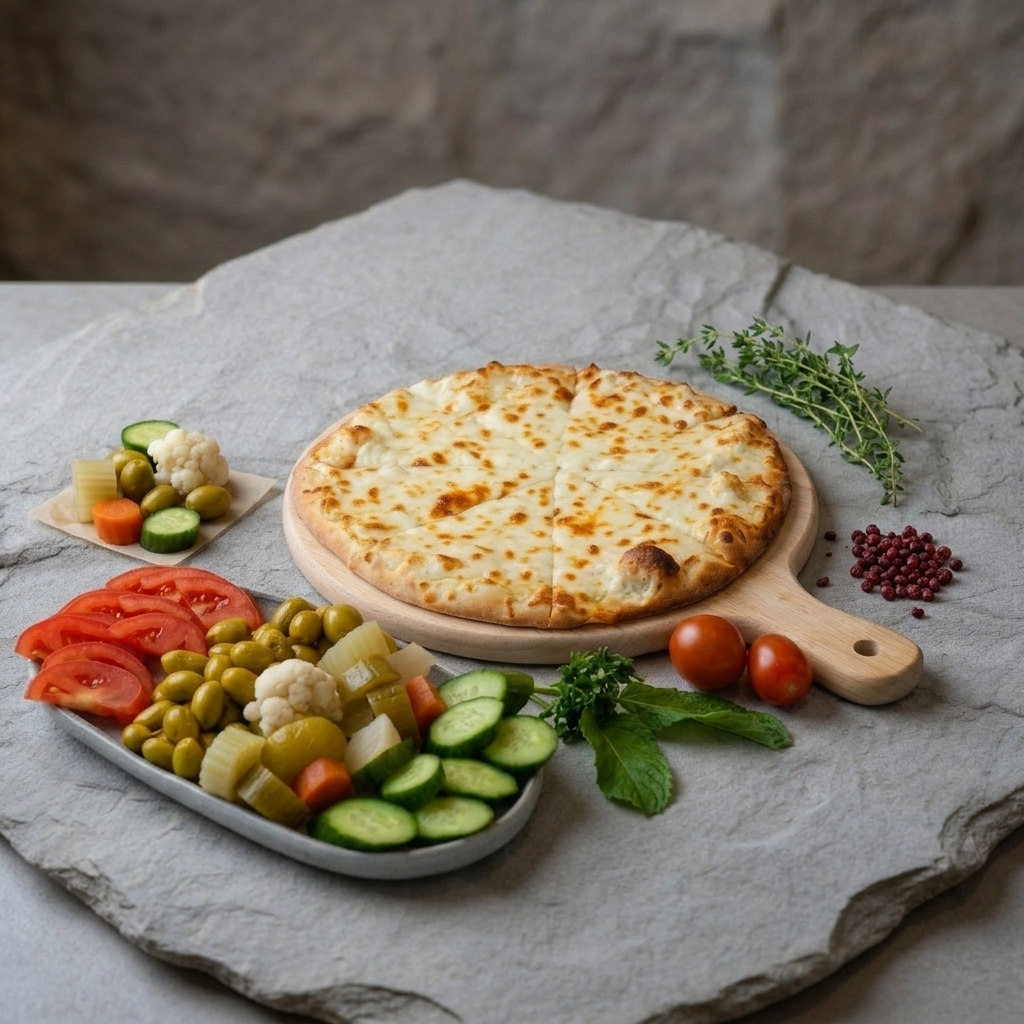
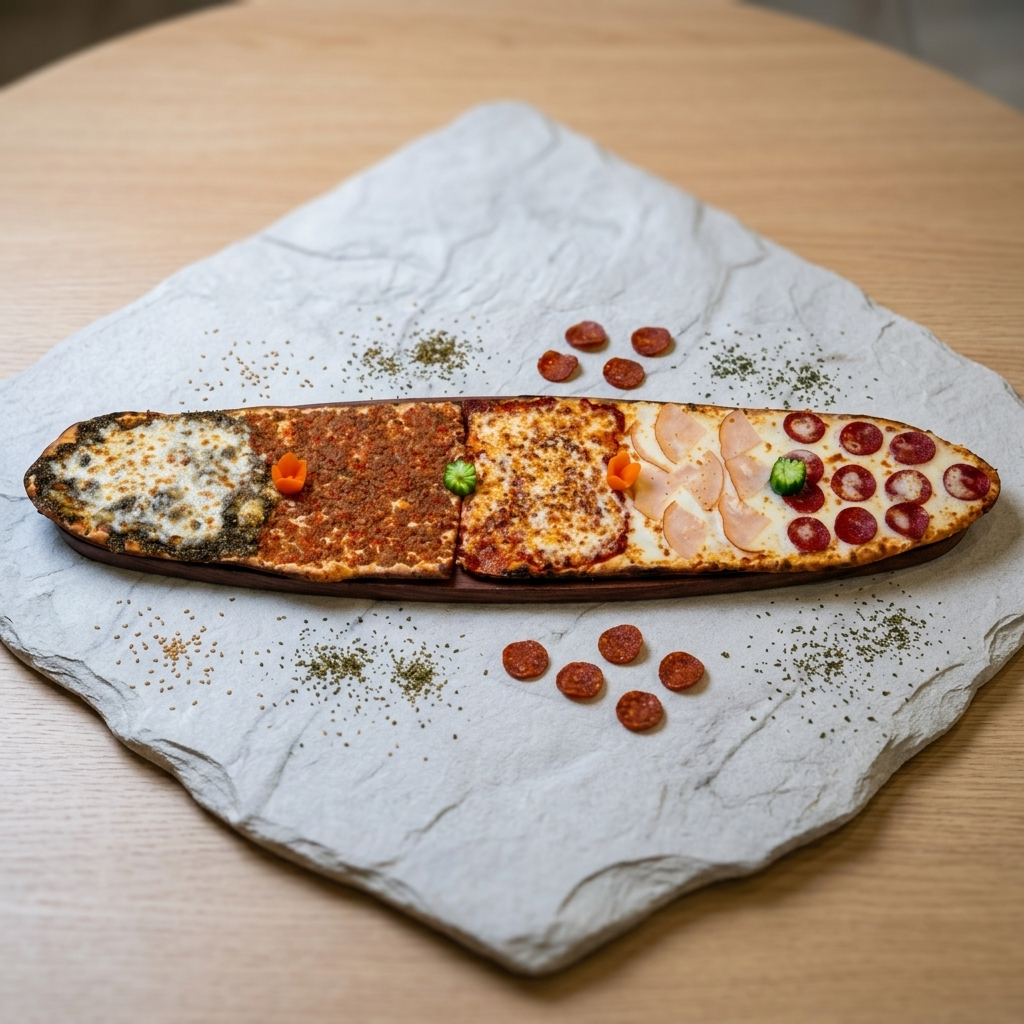
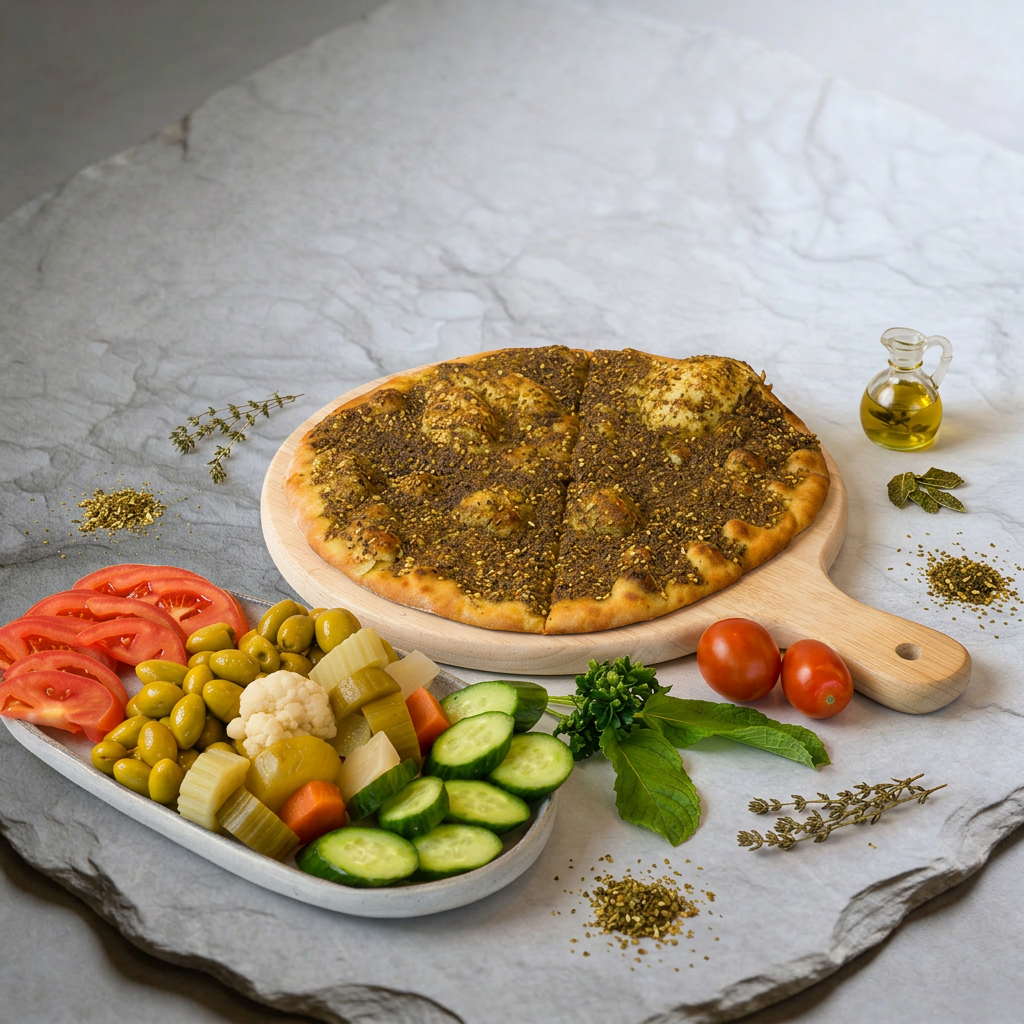
Manakish is the Lebanese flatbread that anchors the breakfast table. Properly made manakish uses a yeasted dough that is rolled thin, topped, and baked in a high-heat stone oven for a few minutes. The result is a bread that is crisp at the edges, soft and airy in the centre, and carries the flavour of its topping all the way through rather than just on the surface.
The most common toppings are za'atar (a blend of wild thyme, sesame seeds, and olive oil — the specific za'atar blend is one of the markers of quality), cheese (typically halloumi, akawi, or a blend), and a combination of the two. Less common but equally traditional: labneh, soujouk (spiced cured sausage with cheese), shanklish (aged fermented cheese), and lahim bel ajeen (spiced minced meat on a thin base).
What to look for: manakish should come to the table hot from the oven. If it has been sitting, the crust softens and the bread loses its character. A restaurant serving proper Lebanese breakfast is baking manakish continuously through the morning service, not pre-baking a batch and keeping it warm.
Labneh
Labneh is yoghurt that has been strained for long enough — typically 12–24 hours — to lose most of its liquid and develop a thick, creamy, slightly tangy consistency somewhere between Greek yoghurt and soft cheese. It is served with olive oil, dried mint or za'atar, and olives. It is eaten by spreading it on bread.
The quality difference between good labneh and mediocre labneh is immediately obvious. Good labneh is thick, white, and clean-tasting — tart without being sour, rich without being heavy. Mediocre labneh tastes like commercial yoghurt that has been drained for too short a time. Restaurants that make their own labneh are operating at a different level from those who buy it pre-made. The difference is worth asking about.
Foul Madamas
Foul madamas — slow-cooked whole fava beans with olive oil, lemon juice, garlic, and cumin — is one of the oldest dishes in the Lebanese breakfast repertoire and one of the most misunderstood outside of it. In Lebanon, foul is not a secondary item. It is a staple — the protein anchor of the morning table. A proper foul madamas is warm, deeply flavoured (the beans should taste of themselves, not be masked by over-seasoning), and served with fresh bread for scooping.
What to look for: foul should be whole beans, not a paste. The texture should be soft but intact. The olive oil should be generous and present at the surface. If the foul at a Lebanese breakfast restaurant tastes of cumin and little else, it has been over-spiced to compensate for under-quality beans.
The Cheese Plate and Olives
A Lebanese breakfast table without olives and a mixed cheese plate is incomplete. The cheeses are typically halloumi (grilled or fresh), feta, and jibneh shalal (a pulled, stringy white cheese similar to mozzarella in texture). The olives are usually a mix of Lebanese green varieties dressed in oil and herbs. These dishes are the background of the table — the items that make everything else feel complete rather than the star of the meal — but their quality is immediately apparent.
Arabic Coffee
Arabic coffee — ground light-roast coffee brewed with cardamom and served unsweetened in small handle-less cups — is the drink that opens and closes a Lebanese morning. It is not espresso. It is not Turkish coffee. It is a specific preparation with a specific cultural role: the first cup signals that the morning has begun, and the last cup signals that it is complete. At a proper Lebanese breakfast restaurant, Arabic coffee is brewed correctly — the right bean, the right roast, the right spice, the right temperature. It should smell aromatic, taste warm and slightly bitter, and finish clean.
Lebanese Breakfast vs Arabic Breakfast — Is There a Difference?
In Dubai, 'Arabic breakfast' and 'Lebanese breakfast' are sometimes used interchangeably and sometimes used to describe different things. Arabic breakfast is the broader category — it covers the morning food traditions of the Arabic-speaking world from Morocco to the Gulf, and there is significant regional variation within it. Lebanese breakfast is a specific subset of that category.
The Lebanese version is distinguished by: the centrality of manakish (flatbread from the stone oven), the specific za'atar blend used in cooking, labneh as a table staple rather than a side option, and the particular cheese traditions (shanklish, jibneh shalal) that are specific to the Levant.
If a Dubai restaurant describes its offering as an 'Arabic breakfast', it may be excellent — but it will not necessarily be the same experience as a specifically Lebanese morning table. If Lebanese breakfast is what you are looking for, confirming the menu composition before booking is worth the effort.
Where to Have Lebanese Breakfast in Dubai
Business Bay — AMOO Restaurant
AMOO on Marasi Drive, Business Bay serves Lebanese breakfast daily from 7:00 AM to 12:00 PM. The breakfast menu covers the full spectrum: stone-baked manakish in twelve variations, labneh strained overnight and served with olive oil and za'atar, foul madamas, mixed cheese plates, traditional egg dishes, and Arabic and Turkish coffee.
The kitchen begins before opening. The manakish dough is prepared each morning. The za'atar blend is mixed in-house. The labneh is strained overnight. The operation reflects the same commitment to quality that characterises the rest of the AMOO menu — which is built on a no-shortcuts principle that extends from the morning bread to the late-night shisha lounge.
Breakfast at AMOO starts from AED 28 for manakish. The AMOO Breakfast (the full spread: fried eggs, labneh, jam, makdous, mixed cheeses, falafel, manakish, foul, luncheon meat, olives) is AED 75 and serves as a complete morning meal for two. The Traditional Spread combo (foul, hummus, labneh, manakish, tea) is AED 55.
How to Order Lebanese Breakfast — A Practical Guide for First-Timers
If you are visiting a Lebanese breakfast restaurant in Dubai for the first time, the ordering approach that produces the best table is: start with one or two manakish (za'atar and cheese are the safe starting point), add labneh and a cheese plate, order foul madamas, and let everything else be guided by what looks good and who you are with. The bread is the constant — order more of it than you think you need.
For a group of two, the AMOO Breakfast Special (two manakish, labneh, olives, fresh juice — AED 45) is a good entry point. For a more complete table for two, add foul madamas and a cheese plate and you have covered all the key elements of the Lebanese morning spread.
Arabic coffee comes at the end. Order it before you are ready for it — it takes a moment to prepare properly and should arrive just as the bread is finishing.
Final Thoughts
Lebanese breakfast in Dubai is widely available and inconsistently executed. The markers of quality are not difficult to identify once you know what to look for — fresh bread from the oven, properly strained labneh, whole-bean foul, Arabic coffee brewed correctly. A restaurant that gets these things right is running a genuine Lebanese kitchen, not a Lebanese-themed café.
If you are in Business Bay and looking for Lebanese breakfast that starts properly at 7AM and runs through a slow morning, AMOO on Marasi Drive is the address.
Frequently Asked Questions
What is Lebanese breakfast?
Lebanese breakfast is a communal morning spread built around fresh-baked manakish (flatbread), labneh (strained yoghurt), foul madamas (slow-cooked fava beans), hummus, olives, and cheese. Arabic coffee closes the meal. It is designed to be shared across the table rather than eaten as a single-plate individual dish.
What is manakish?
Manakish is Lebanese flatbread baked in a stone oven and topped with za'atar (thyme blend), cheese, labneh, meat, or a combination. It is the central dish of a Lebanese breakfast and the quality indicator for any restaurant serving Lebanese morning food.
What is the difference between Lebanese breakfast and Arabic breakfast?
Arabic breakfast is the broader category covering morning food traditions across the Arab world. Lebanese breakfast is a specific regional version characterised by stone-oven manakish, labneh, specific Lebanese cheese varieties (shanklish, jibneh shalal), and za'atar blends particular to the Levant.
Where can I have Lebanese breakfast in Business Bay Dubai?
AMOO on Marasi Drive, Business Bay serves Lebanese breakfast daily from 7:00 AM to 12:00 PM. Manakish from AED 28, full breakfast spread from AED 75.
How much does Lebanese breakfast cost in Dubai?
At AMOO, manakish starts from AED 28. The AMOO Breakfast (full spread) is AED 75. The Traditional Spread combo (foul, hummus, labneh, manakish, tea) is AED 55. The AMOO Breakfast Special (2 manakish, labneh, olives, juice) is AED 45.
Does AMOO serve Arabic coffee with breakfast?
Yes — Arabic coffee (cardamom-spiced, AED 12) and Turkish coffee (AED 15) are both available from 7AM alongside the full breakfast menu.
Experience AMOO
Visit us for authentic Lebanese cuisine and premium shisha experience.